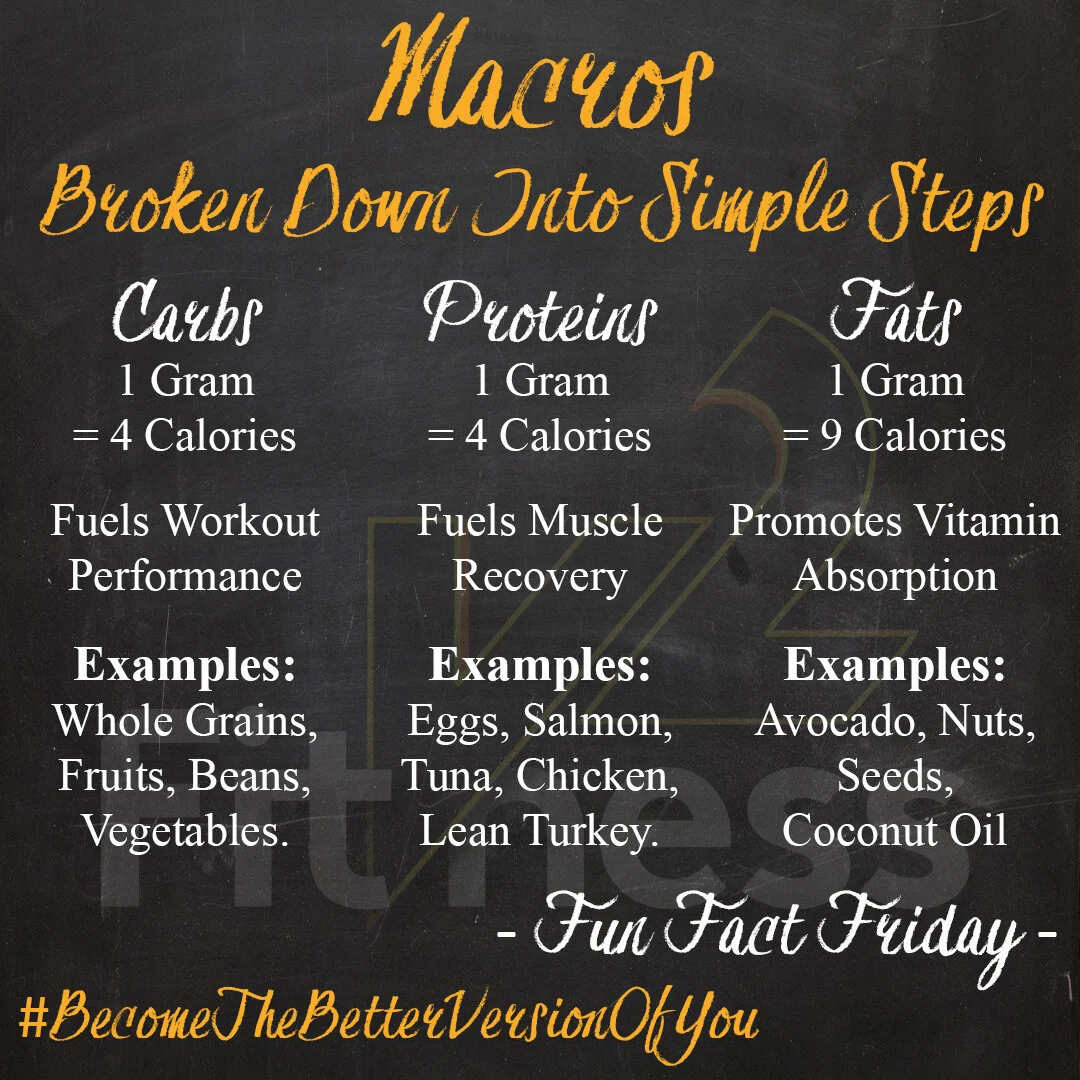
Macros, Broken Down Into Simple Steps.
Did you know that breaking down macros can be very easy, you simply need to know what to look out for and what they do, so below you will find some simple facts to make you understand the macros better.
So what exactly are macros? Macronutrients, or “macros,” are the building blocks of nutrition. You probably know them better as carbohydrate, protein, and fat. Macros are the nutrients you need in large amounts, as they provide your body with the calories it needs to function. Ensuring we consume the right balance of macronutrients can significantly impact the quality of our results, whether our goal is fat loss, muscle gain, or weight maintenance.
How does our body use the three different macros? Our bodies use carbohydrates, followed by fats, and then protein as a fuel source.
Below is a breakdown of the macros: In the amount you need, what that macro is used for and some examples of that macro.
Carbs: Carbohydrates are the sugars, starches and fibres found in fruits, grains, vegetables and milk products.
1 gram = 4 Calories
Fuels Workout Performance
Examples: Whole Grains, Fruits, Beans, Vegetables.
====================================
Proteins: Proteins are essential to building muscle mass. Protein makes up about 15% of a person's body weight. Chemically, protein is composed of amino acids, which are organic compounds made of carbon, hydrogen, nitrogen, oxygen or sulfur.
1 gram = 4 Calories
Fuels Muscle Recovery
Examples: Eggs, Salmon, Tuna, Chicken, Lean Turkey.
====================================
Fats: Fat is an essential part of our diet and is important for good health. There are different types of fats, with some fats being healthier than others.
1 gram = 9 Calories
Promotes Vitamin Absorption
Examples: Avocado, Nuts, Seeds, Coconut Oil
====================================